
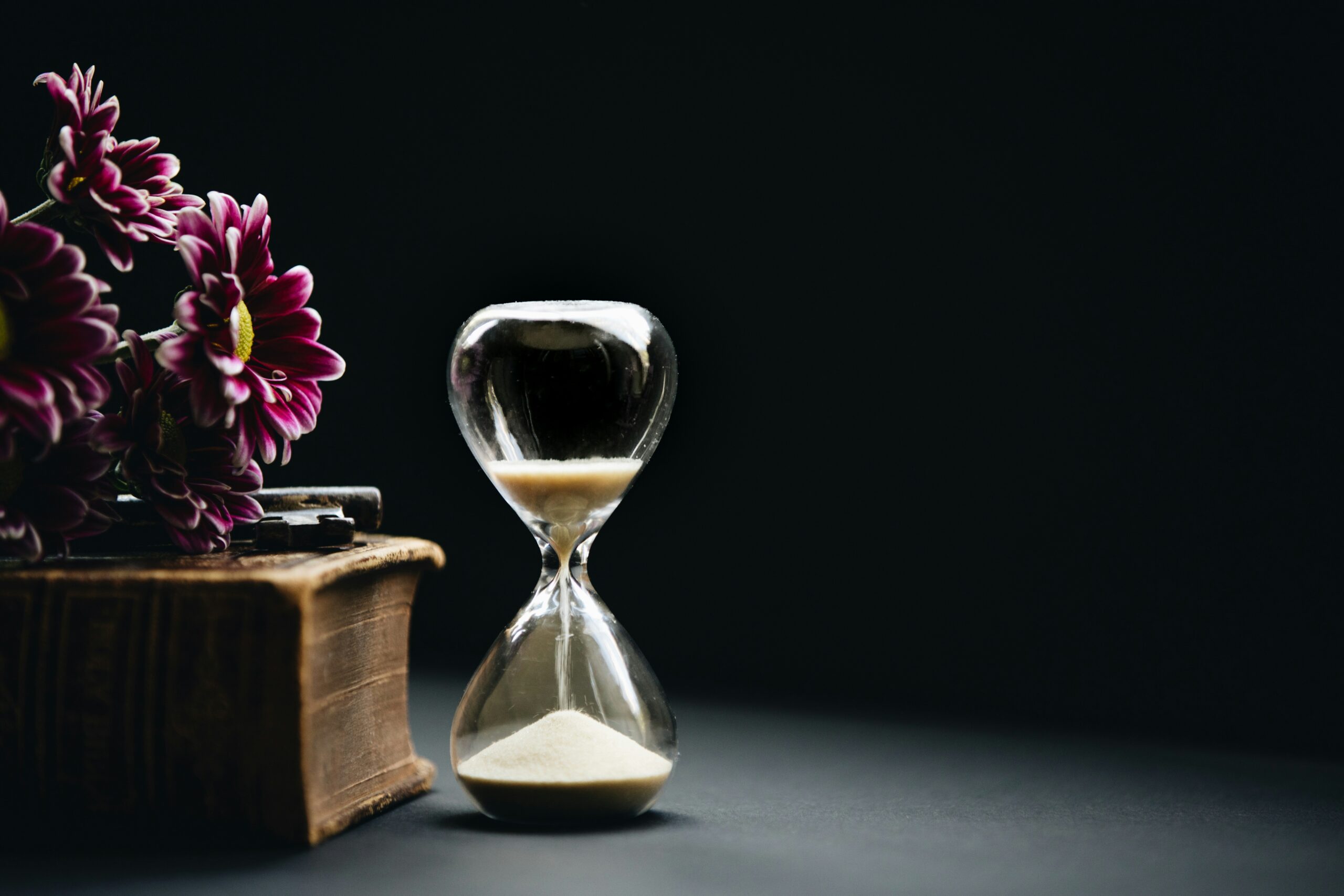
At some point, many people develop a quiet but persistent feeling: that life has not quite begun yet. Not in a dramatic sense, but subtly — as if everything happening now is only preparation. We tell ourselves we will start living aftersomething changes. After things settle. After we feel more secure, more confident, more ready.
This sense of waiting is rarely explicit. It hides behind responsible decisions, long-term plans, and reasonable excuses. We frame it as patience or caution. But underneath, there is often a deeper assumption: that life exists in a future version of ourselves, and the present is merely a draft.
This article examines why so many of us feel stuck in this waiting mode — not from a motivational perspective, but through an analytical lens shaped by modern sociology, psychology, and existential thought. The argument is not that people are passive or lazy. On the contrary, many who feel this way are constantly busy. What they are waiting for is not time, but permission.
Life as a “Pre-Phase”
In contemporary culture, life is often divided into phases: preparation, transition, and arrival. Education prepares us for work. Work is supposed to prepare us for stability. Stability, in turn, promises the moment when we can finally relax into life.
The problem is that this arrival point keeps moving.
Sociologists describe this as delayed adulthood or extended liminality — a state where individuals remain in between roles, identities, or stages longer than previous generations. But beyond terminology, the lived experience is simpler: people feel that they are constantly getting ready for something that never fully arrives.
This creates a paradox. Objectively, life is happening. Subjectively, it feels postponed.
The language we use reveals this clearly. “Once things calm down.” “When I have more time.” “After I figure myself out.” These statements suggest that life requires optimal conditions — conditions that reality rarely provides.
The Myth of Readiness
At the center of this waiting lies the idea of readiness. We assume that before fully engaging with life, we must reach a certain internal or external state: emotional clarity, financial security, personal alignment.
Existential philosophy challenges this assumption directly. Thinkers like Sartre argued that meaning does not precede action; it emerges from it. We do not first become ready and then live. We live first, and readiness — if it ever comes — is shaped along the way.
Modern culture, however, promotes the opposite idea. Self-improvement narratives imply that we are projects in progress. There is always something to fix, optimize, or understand before we can begin. This framing turns life into a perpetual preparation phase.
Psychologically, this creates a loop. The more we analyze ourselves, the more reasons we find to delay. Awareness, when detached from action, becomes paralysis rather than insight.
Modern Time and the Pressure to Optimize
Waiting today does not look like idleness. It looks like productivity.
People fill their days with tasks, goals, and constant self-monitoring. Time is managed, optimized, and accounted for. Ironically, this obsession with efficiency often intensifies the feeling that life is not happening.
Why?
Because when every moment is evaluated for usefulness, nothing feels complete in itself. Experiences become means rather than ends. Even rest is justified only if it improves future performance.
Sociologists of late modernity describe this as living under instrumental time — time that is always serving a next step. In such a framework, the present moment is rarely allowed to stand on its own. It exists only as a bridge.
This also explains why people often say they feel busy but empty. Activity does not necessarily produce presence. Movement does not guarantee arrival.
Waiting as a Cultural Norm
Waiting for life to start is not merely an individual issue; it is socially reinforced.
From early on, we are taught to orient ourselves toward future milestones. Success, fulfillment, and even happiness are framed as outcomes rather than processes. The message is subtle but consistent: life becomes real once certain boxes are checked.
This cultural script makes waiting feel responsible. Questioning it can even feel reckless. After all, planning is rational. Delaying gratification is praised. But when postponement becomes indefinite, it stops being strategy and turns into habit.
Digital culture amplifies this tendency. Social media presents curated timelines where life appears to begin at visible moments of achievement or transformation. This reinforces the idea that one’s current state is incomplete — not yet worthy of recognition, not yet “the real thing.”
As a result, people internalize a strange contradiction: they feel behind, even when they are objectively moving forward.
The Existential Cost of Postponement
Existentially speaking, the most significant cost of waiting is not lost time, but disengagement.
When life is perceived as something that will start later, the present becomes emotionally thin. Decisions feel provisional. Relationships feel temporary. Even identity feels tentative — as if who we are now does not fully count.
This creates what could be called existential suspension: a state where individuals exist physically but hesitate to inhabit their lives fully. They are present, but not invested.
From an existential perspective, this is problematic because meaning is not discovered in retrospect; it is created through engagement. Waiting for clarity before acting often results in neither.
Kierkegaard warned against this kind of postponement, arguing that avoiding commitment in the name of certainty leads to despair. Modern life, with its endless options and safety nets, makes this avoidance easier — and more socially acceptable.
Why Waiting Feels Safer Than Living
One reason waiting persists is that it feels safe.
Living fully implies risk: of failure, regret, exposure, and responsibility. Waiting allows individuals to preserve potential. As long as life has not started, nothing has truly gone wrong.
This mindset treats identity as fragile. Choices are delayed to avoid closing doors. But the refusal to choose is itself a choice — one that often leads to stagnation rather than freedom.
Psychologically, this can be understood as avoidance masked as preparation. It is not laziness or fear in a simplistic sense, but a deeply learned response to uncertainty.
In modern societies that emphasize individual responsibility for success and happiness, the stakes of living “wrongly” feel high. Waiting becomes a way to manage that pressure.
Life Does Not Announce Its Beginning
Perhaps the most important realization is this: life does not begin with a clear signal.
There is no moment when uncertainty disappears, when identity solidifies, or when conditions become ideal. Expecting such a moment is understandable — but unrealistic.
From an analytical standpoint, the feeling that life has not started often reflects a mismatch between cultural narratives and lived reality. We are taught to expect coherence, but life is fragmented. We expect readiness, but life demands participation first.
Recognizing this does not require dramatic change. It requires a shift in orientation: from waiting for life to start, to noticing that it has already been happening.
Moving Without a Grand Conclusion
This is not a call to reckless action or forced optimism. It is an invitation to question the assumption that life must wait for completion, clarity, or confidence.
Modern life encourages us to stay in draft mode — always revising, never publishing. But drafts that are never lived do not become better versions. They remain unfinished.
Life, inconveniently, does not wait for us to feel ready. It unfolds anyway. The choice is not whether it starts, but whether we show up while it does.

Bir yanıt yazın